We do not store credit card details.
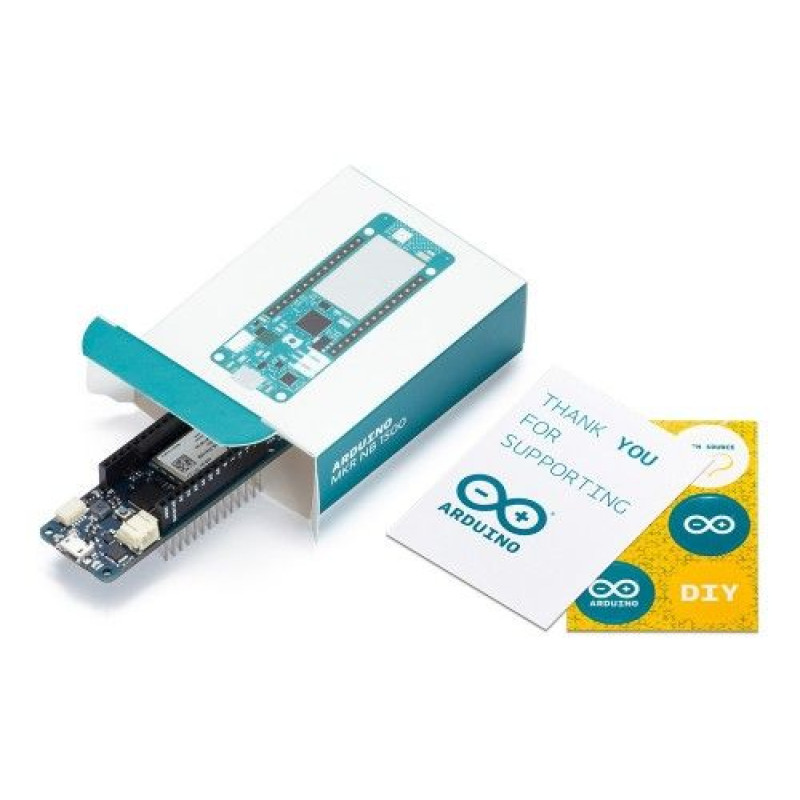
Arduino MKR NB 1500 / ABX00019
We do not store credit card details.
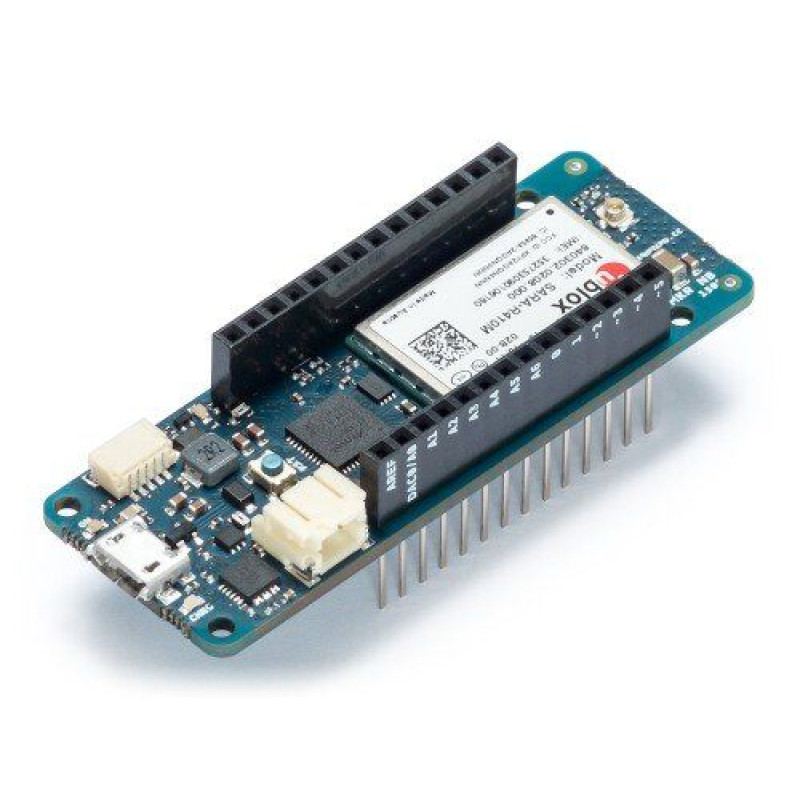
TheArduino MKR NB 1500 is a board based on the SAMD21 microcontroller with a low-power Cortex-M0 32-bit processor. This controller provides a wide range of available interfaces such as I2S, I2C, UART and SPI.
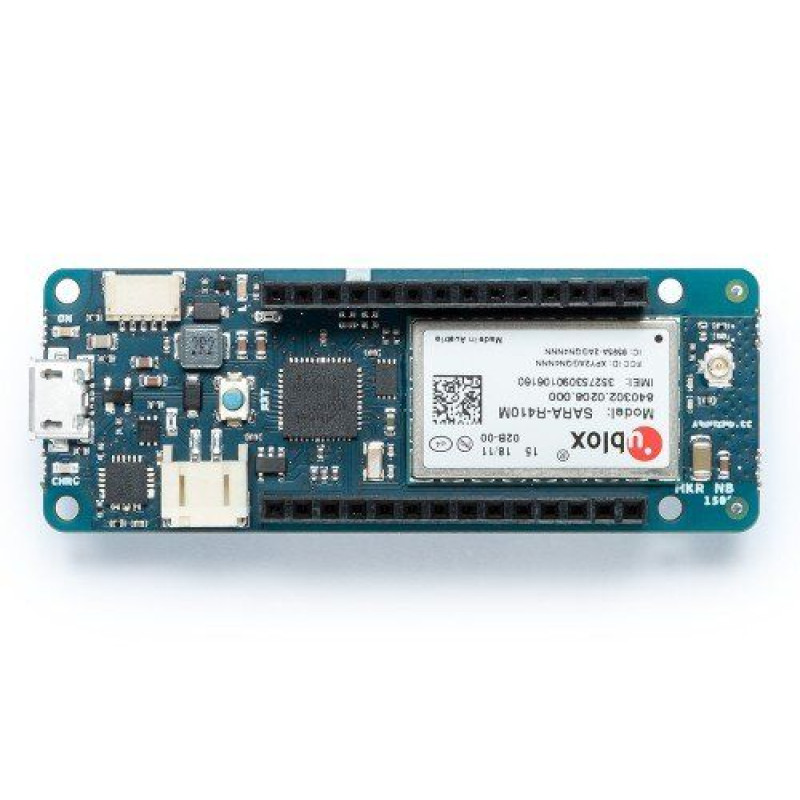
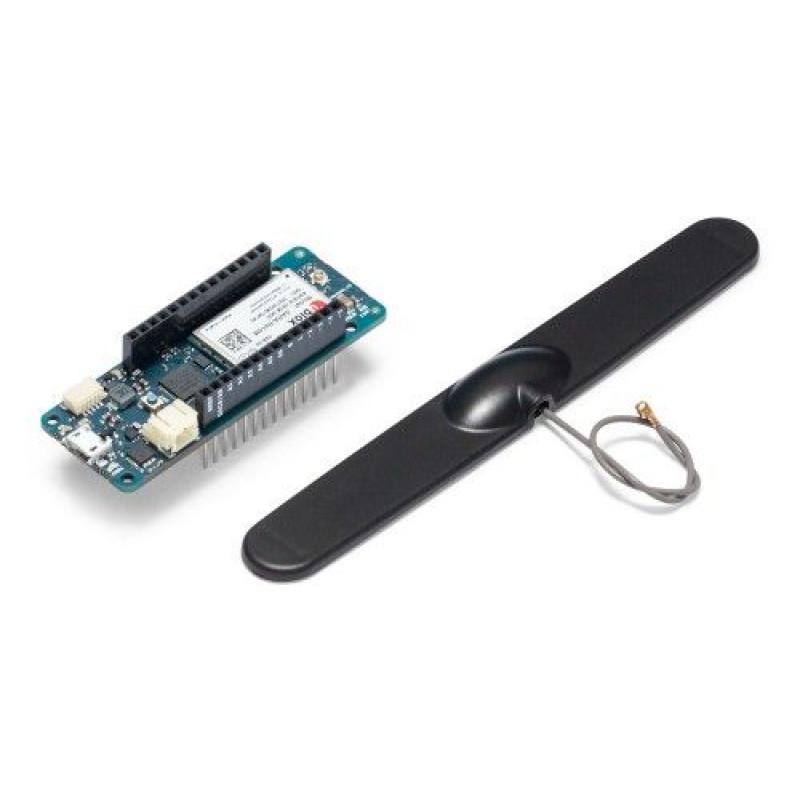
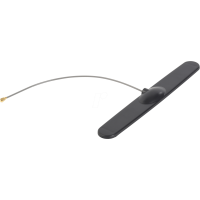
The board operates at 3.3V and offers 22 digital I/O, 12 PWM outputs, and seven analog inputs. However, the most important feature of this device is that the board is equipped with NB-IoT technology, which provides fast communication using the LTE cellular network. The narrowband connection is made using a module from u-blox - the low-power SARA-R410M-02B chipset, which operates in different bands of the IoT LTE cellular range. In addition, secure communication is ensured by the Microchip® ECC508 cryptographic chip. In addition, the board has a charger and a connector for connecting an external antenna. This board is designed for global use, providing connectivity in the LTE Cat M1/NB1 bands 1, 2, 3, 4, 5, 8, 12, 13, 18, 19, 20, 25, 26, 28.
It also stands out because it has a lower impact on energy consumption compared to GSM or 3G. Based on all of the above, we can conclude that this device is ideal for use in places where there is no stable Internet connection or power supply, such as in remote measurement systems, as well as in those that provide power from solar panels.
Technical characteristics:
| Microcontroller. | SAMD21 Cortex®-M0+ 32bit low power ARM MCU |
| Wireless communication | u-blox SARA-R410M-02B |
| Security. | ATECC508 |
| Input voltage (recommended) (USB/VIN) | 5V |
| Supported battery type | Li-Po Single Cell, 3.7V, 1500mAh Minimum |
| Operating voltage | 3.3V |
| Digital outputs (I/O Pins) | 8 |
| PWM pins | 13 (0 ... 8, 10, 12, 18 / A3, 19 / A4) |
| UART PINS | 1 |
| SPI | 1 |
| I2C | 1 |
| Analog outputs (input) | 7 (ADC 8/10/12 bit) |
| Analog outputs (output) | 1 (DAC 10 bit) |
| External interrupts | 10 (0, 1, 4, 5, 6, 7, 8, 9, 16 / A1, 17 / A2) |
| Max. value of DC current per 1 pin (I/O Pin) | 7 mA |
| Flash memory | 256 KB (internal) |
| SRAM | 32 KB (INTERNAL) |
| EEPROM | no |
| Frequency. | 32.768 kHz (RTC), 48 MHz |
| LED_BUILTIN | 6 |
| Full-speed USB device and built-in host | |
| Antenna gain | 2dB |
| Carrier frequency | LTE bands 1, 2, 3, 4, 5, 8, 12, 13, 18, 19, 20, 25, 26, 28 |
| Communication class | LTE Cat M1 / NB1: Class 3 (23 dBm) |
| Bandwidth (LTE M1 Half-Duplex) | UL 375 kbps / DL 300 kbps |
| Throughput (LTE NB1 Full-Duplex) | UL 62.5 kbps / DL 27.2 kbps |
| Positioning of the device | GNSS via modem |
| Power consumption (LTE M1) | min 100 mA / max 190 mA |
| Power consumption (LTE NB1) | min 60 mA / max 140 mA |
| SIM card | MicroSIM (not included in the package) |
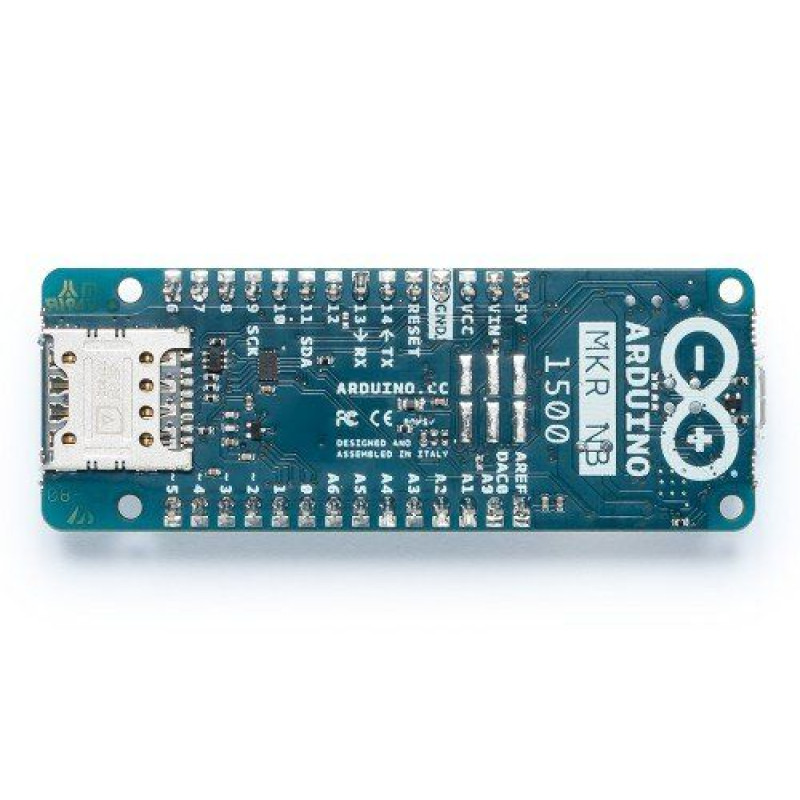
Purpose of the board connectors:

The MKR NB 1500 has an additional I2C port designed to expand the I2C bus. This is a 5-pin small form factor connector with a 1.0 mm pitch. Mechanical details of the connector can be found in its technical description. The I2C port, also called the Eslov self-identification port in Arduino, comes with: SDA, SCL, GND, +5V and an additional digital pin designed to send an alarm signal to simple I2C devices connected to it. The pin assignments are shown in the image:

Information for developers (Wiki): ARDUINO MKR NB 1500.
Overall dimensions: 67.64mm x 25mm
Weight: 0.032 kg
There are no reviews for this product.
There are no reviews for this product, be the first to leave your review.
No questions about this product, be the first and ask your question.