We do not store credit card details.
Raspberry Pi Pico UPS HAT expansion board (20121)
We do not store credit card details.
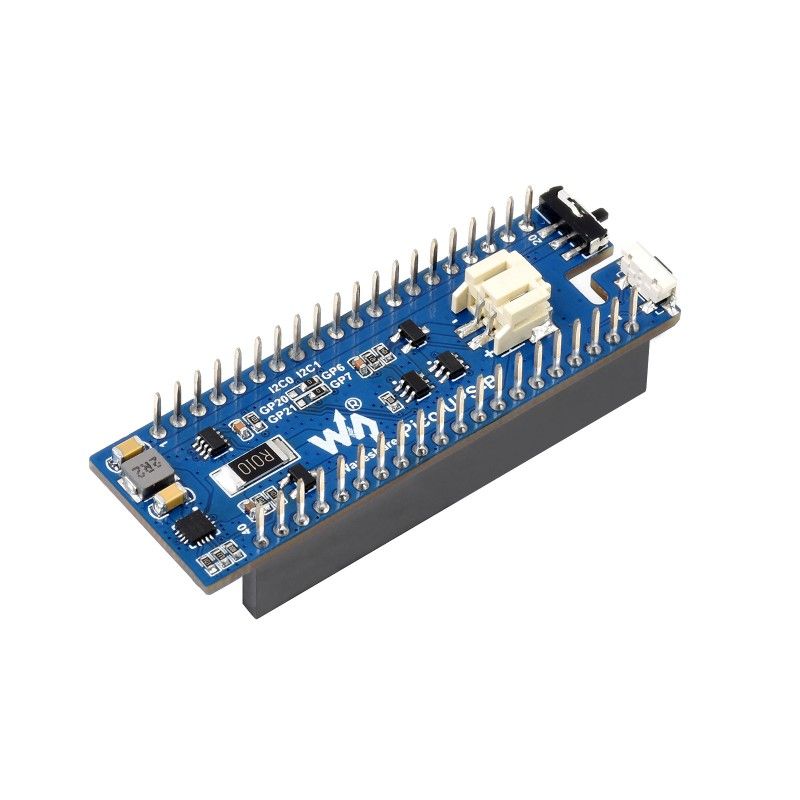
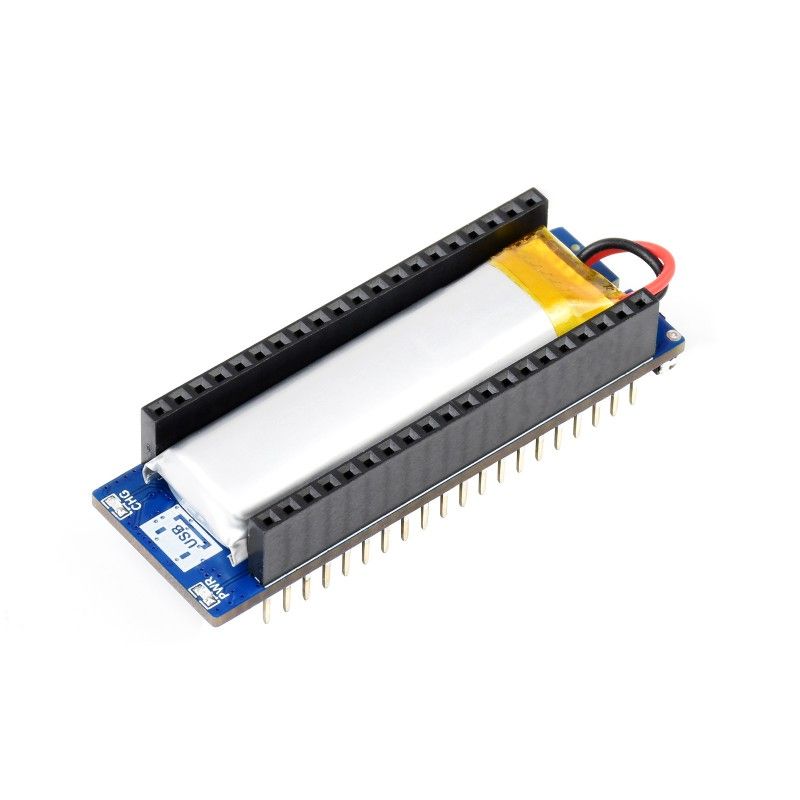
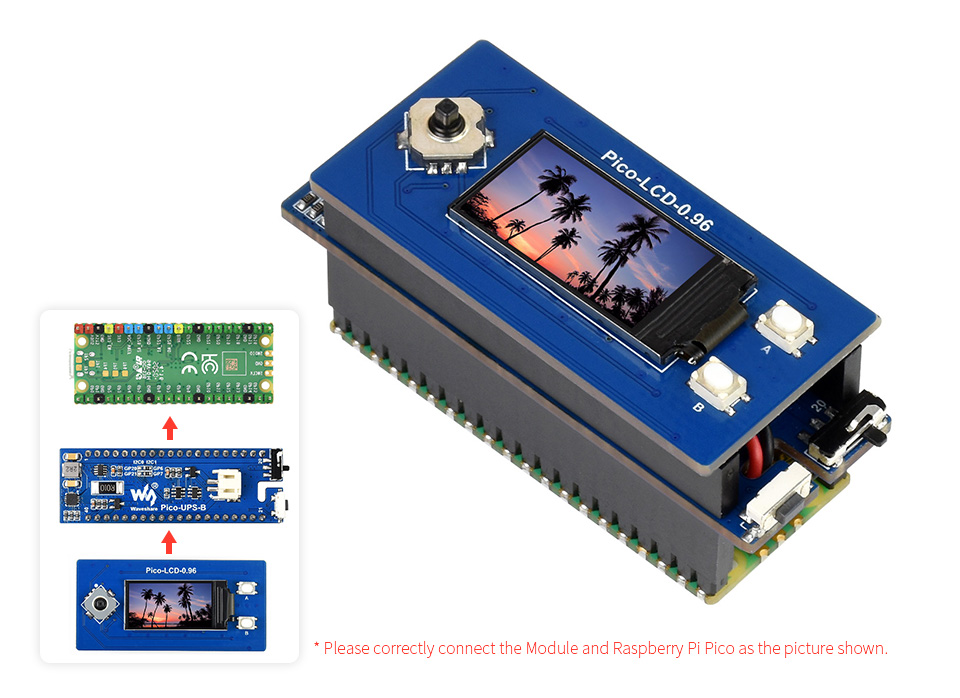
TheRaspberry Pi Pico UPS HAT (20121 ) is an uninterruptible power supply module for the Raspberry Pi Pico microcontroller. It includes a switching Li-po battery charger with power supply circuit management and a voltage/current monitoring chip that allows you to monitor the battery's operating status via the I2C bus. Moreover, the pin contact connector allows you to "stack" other modules on top:

Key features:
- Standard Raspberry Pi Pico connector.
- Includes Li-po battery charger with dynamic power path management
- I2C bus communication, real-time monitoring of voltage, current, power and remaining battery capacity
- Multiple battery protection circuits: overcharge/discharge protection, overcurrent protection, short circuit protection and reverse protection
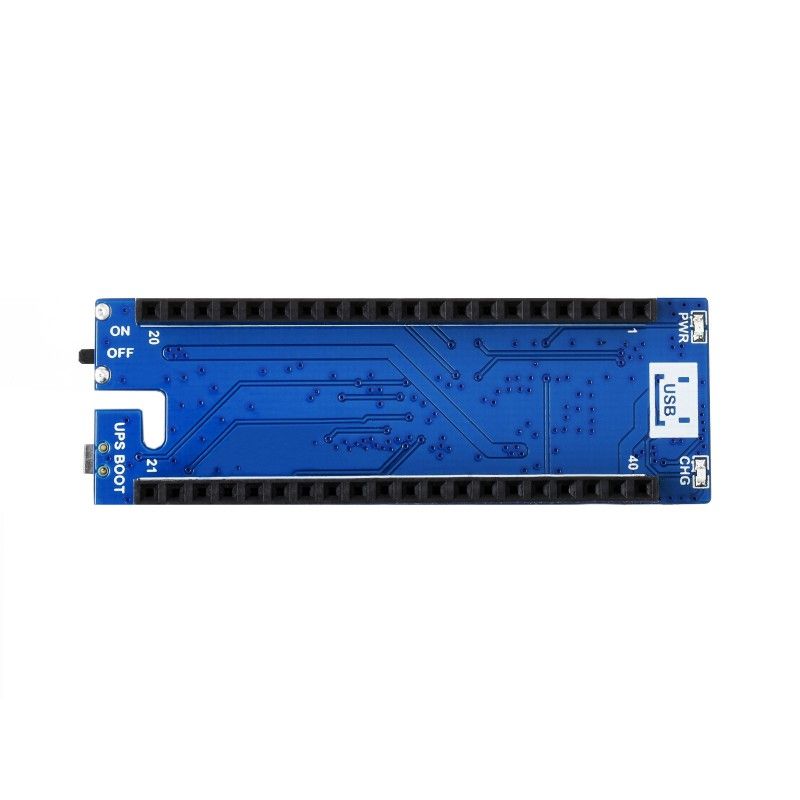
- Built-in charging indicator, power indicator, allowing you to easily check the status and charge level of the battery
- Comes with development resources and manual (Raspberry Pi Pico C/C++ and MicroPython examples)
Technical specifications:
| VOLTAGE. | 5V |
|---|---|
| CONTROL BUS | I2C |
| SUPPORTED BATTERIES | 600mAh 3.7V Li-po battery |
| DIMENSIONS | 60×21mm |
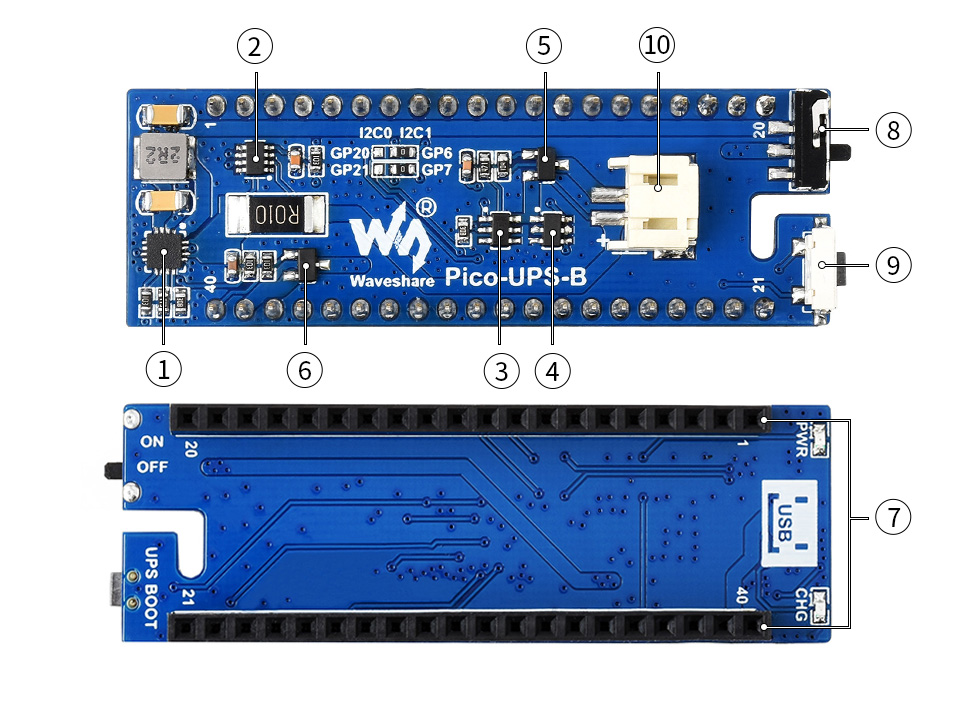
Board elements:

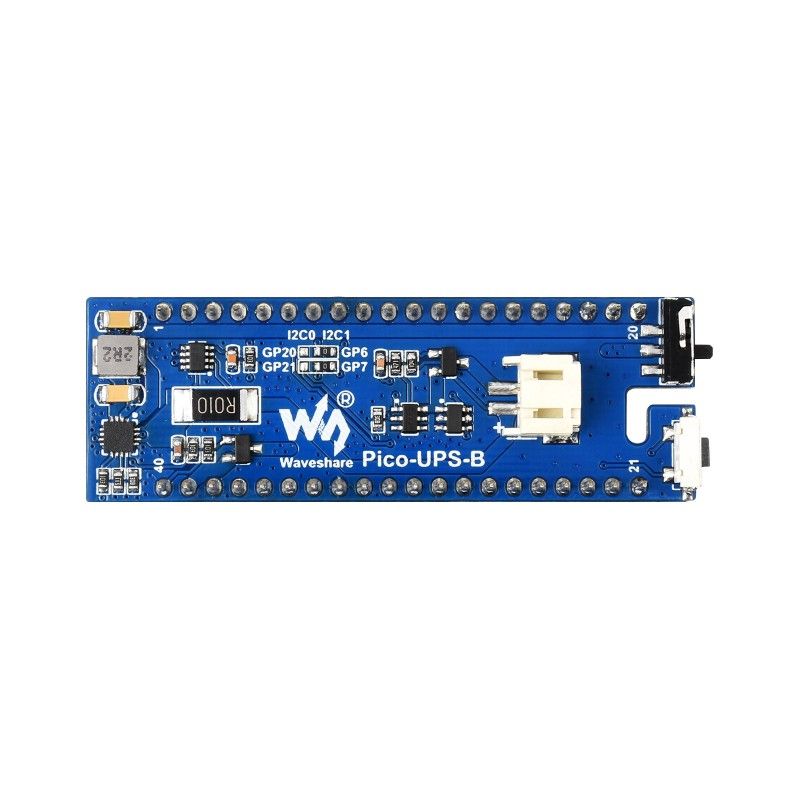
- ETA6003 charger chip
- INA219 voltage / current control chip
- S8261 Li-po battery protection chip
- FS8205 Li-po battery protection MOS
- MOS with reverse protection AO3400
- SI2305 countercurrent preventing MOS
- Raspberry Pi Pico connector for direct connection to a Raspberry Pi Pico
- Switch.
- Activation button activates the protection circuit after battery replacement
- Battery connector for connecting a 3.7V lithium polymer battery
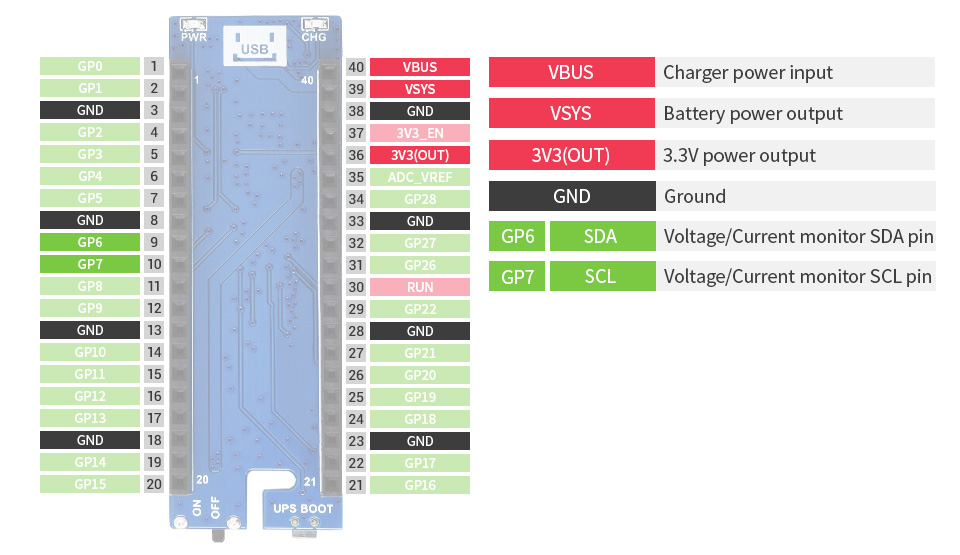
Purpose of the connectors:

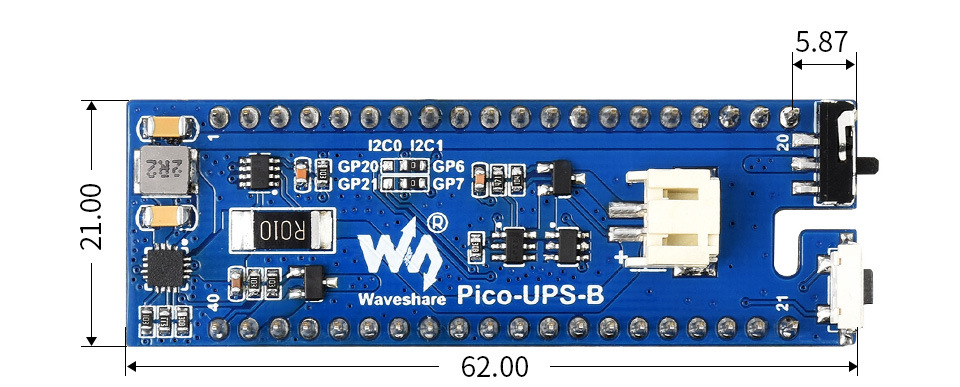
Overall dimensions: 21mm x 62mm

Resources for developers Wiki: Pico-UPS-B
The package includes:
- Pico-UPS-B board x 1
1. 
Weight: 0.024 kg
There are no reviews for this product.
There are no reviews for this product, be the first to leave your review.
No questions about this product, be the first and ask your question.