We do not store credit card details.
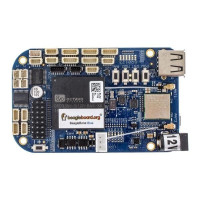
BeagleBone Green microcomputer
We do not store credit card details.
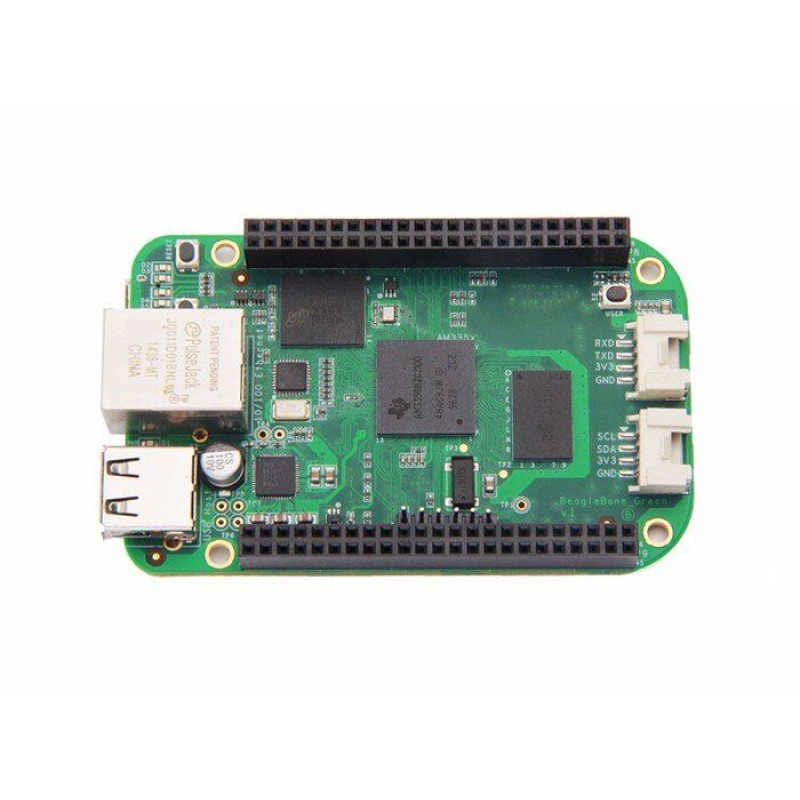
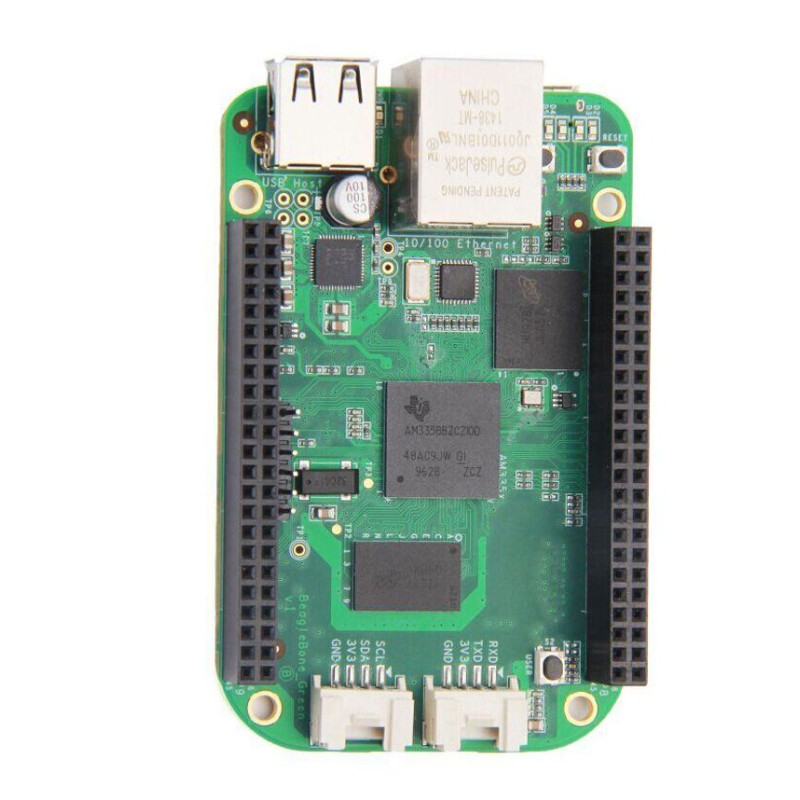
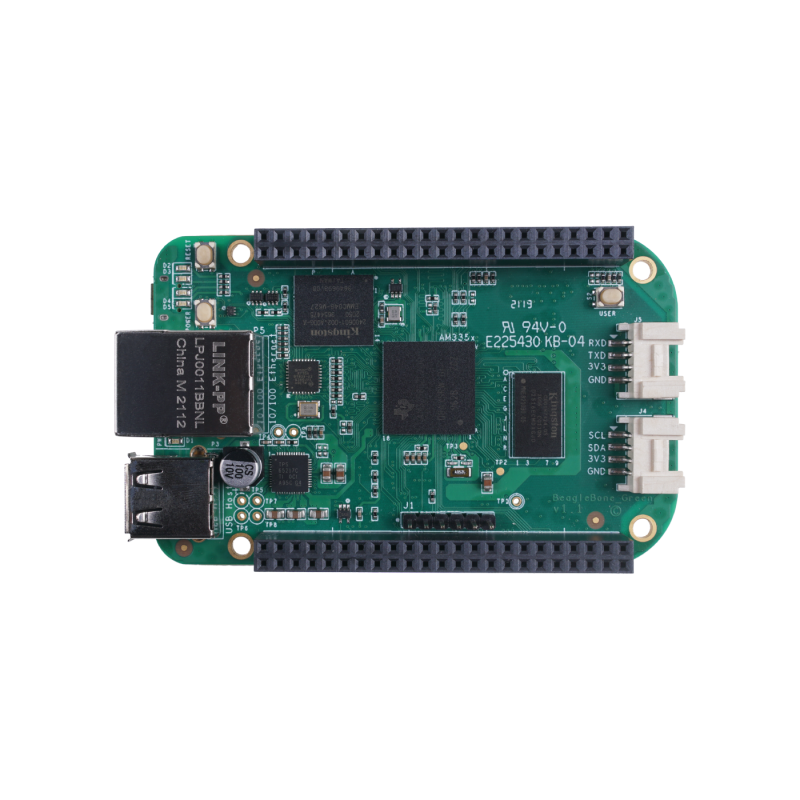
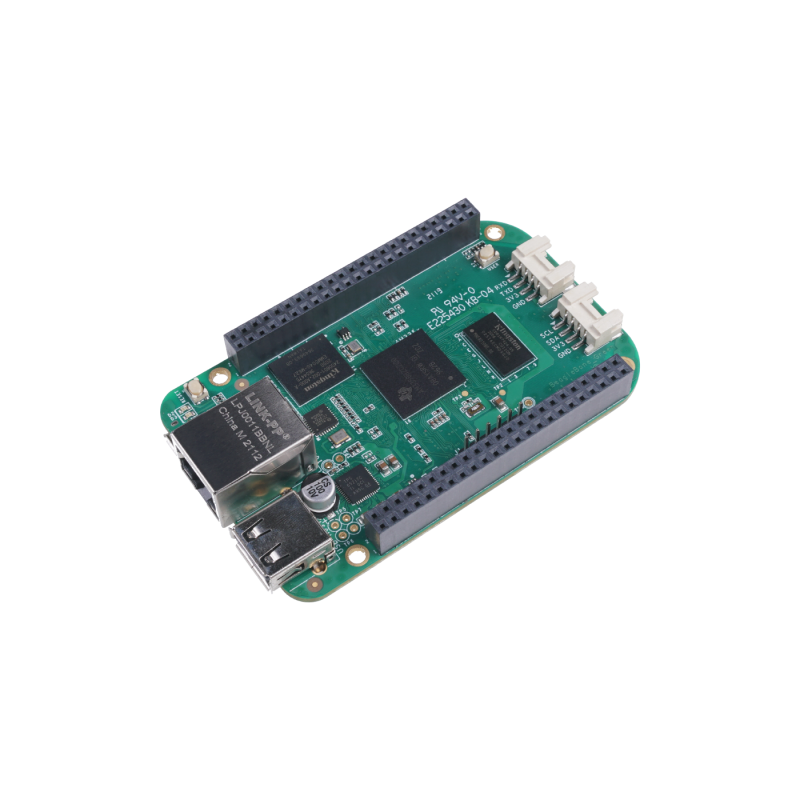
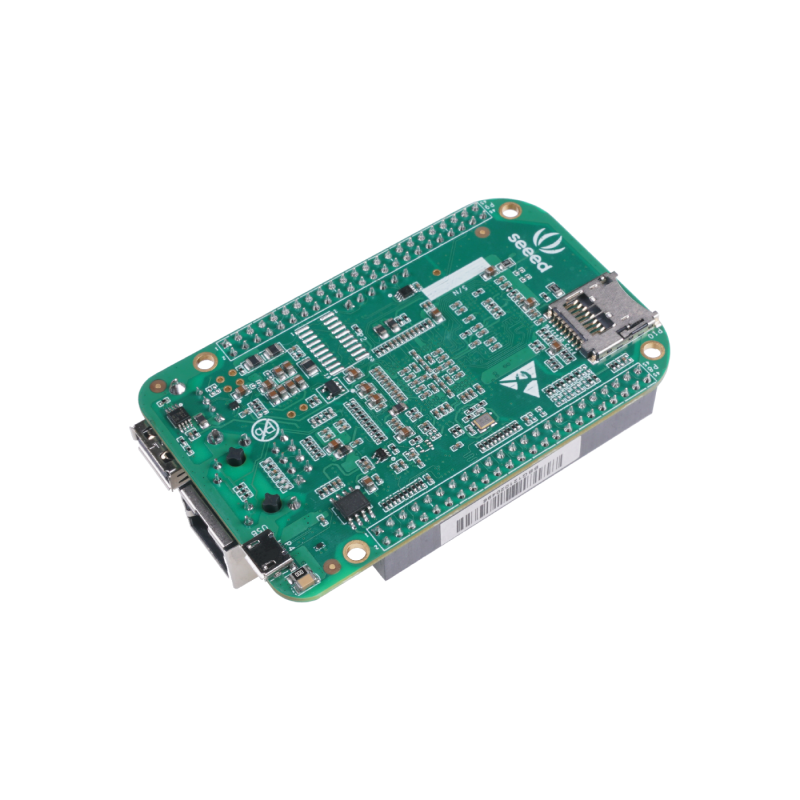
TheSeeedStudio BeagleBone Green (BBG ) is the result of a collaboration between BeagleBoard.org and Seeed Studio. This new version of the board was designed on the open-source BeagleBone Black hardware. BBG has two Grove connectors to simplify the connection of a large number of Grove family sensors. In order to make room for the Grove connectors, we had to sacrifice the HDMI connector, which is not present on this board.
BeagleBone Green is designed to develop projects in the field of the Internet of Things, smart home, industrial automation and process control, human-machine interface, as well as a hub for various sensors or in robotics. It is fully compatible with the BeagleBone® Black.
Key features:
- AM335x 1 GHz ARMR Sitara Cortex-A8 processor
- 512 MB DDR3 RAM
- Built-in flash memory 4 GB eMMC
- CPU supports NEON floating point accelerator and 3D graphics
- 2x PRU 32-bit microcontroller
- Connectors:
- USB client/host (USB supports power and communication)
- Ethernet
- 2x 46 pin headers
- 2x Grove connectors (one I2C and one UART)
- Operating temperature 0 75
Compatible software
- Debian
- Android
- Ubuntu
- Cloud9 IDE on Node.js w/BoneScript library
- and many others
Elements of the board:

- USB Host - USB port
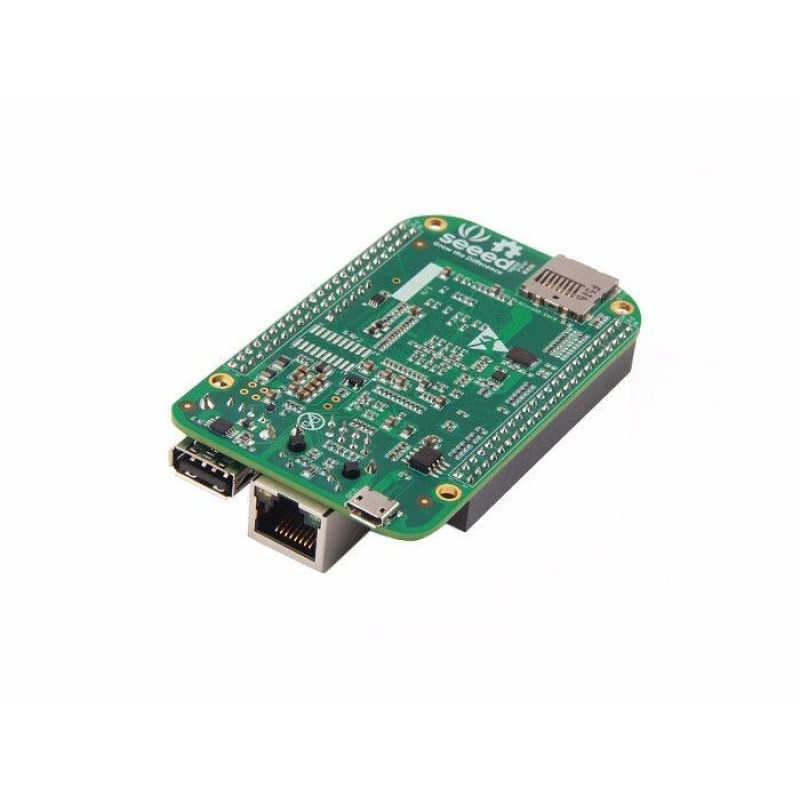
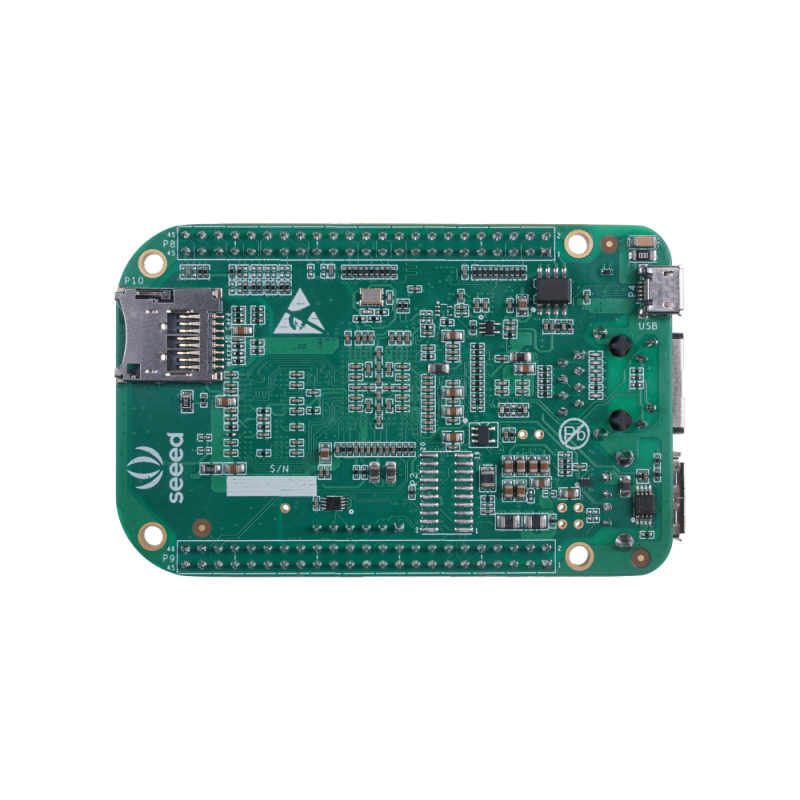
- DC Power and USB Client - board power supply and work as a client
- LEDs - light emitting diodes
D2 is configured at boot to blink as a clock signal.
D3 is configured at boot to light up while accessing the microSD card
D4 is configured at boot to light up during CPU activity
D5 is configured at boot to light up during eMMC access - Boot button
If an SD card is inserted, the system will boot from the SD card first, if you want to boot from eMMC, press this button and then power on.
After booting, it can be used as a normal button to connect to GPIO_72 - I2C Grove Interface - I2C Grove interface (connected to I2C2)
- Uart Grove Interface - Uart Grove interface (connected to UART2)
- Serial Debug - Serial debugging (connect to UART0, PIN1 PIN6: GND, NC, NC, RX, TX, NC, note that pin 1 is next to USB).
Purpose of the connectors
Each digital I/O output has 8 different modes that can be selected, including GPIO.
65 possible digital inputs/outputs
Note: In GPIO mode, each digital I/O can generate an interrupt.

PWM and timers
Note: Up to 8 digital I/O pins can be configured with Pulse Width Modulators (PWM) to generate signals to control motors or create pseudo-analog voltage levels without using additional CPU cycles.

Analog inputs
Note: Ensure that the analog input pins are not applied to voltages greater than 1.8 V. This is a single 12-bit analog-to-digital converter with 8 channels, 7 of which are available on the connectors.

UART
Note: there is a special connector for accessing the UART0 pins and connecting a debug cable. Five additional serial ports are added to the expansion connectors, but one of them has only one direction to the socket.

I2C
Note: The first I2C bus is used for reading EEPROMS on the expansion cards and cannot be used for other digital I/O operations without interfering with this function, but you can still use it to add other I2C devices at the available addresses. The second I2C bus is available for configuration and use.

SPI.
Note: For fast data transfer, you may want to consider using one of the SPI ports.

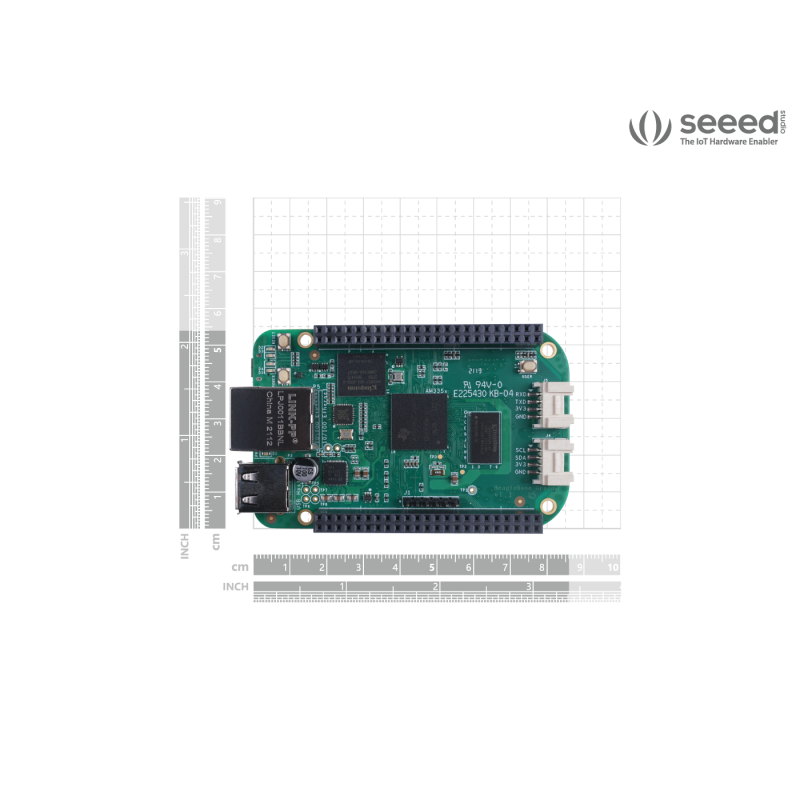
Overall dimensions: 54.6mm x 86.4mm

Resources for developers Wiki: Seeed Studio BeagleBone® Green Schematic(OrCAD) v1c
The package includes:
- SeeedStudio BeagleBone® Green board x1
- USB cable x1
- User manual x1
Weight: 0.081 kg
There are no reviews for this product.
There are no reviews for this product, be the first to leave your review.
No questions about this product, be the first and ask your question.