We do not store credit card details.
Coral Dev Board Mini
We do not store credit card details.
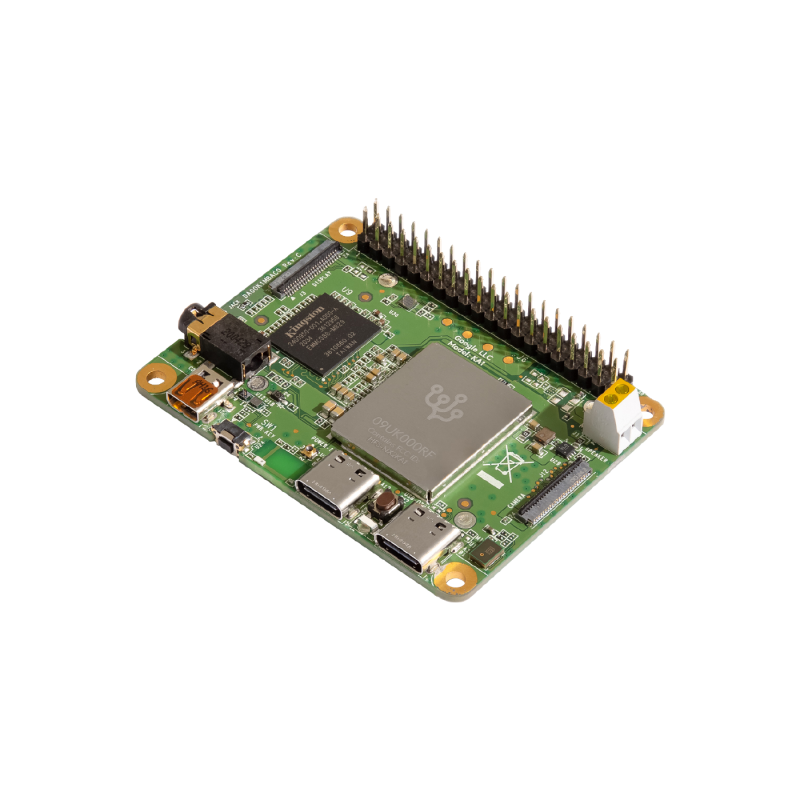
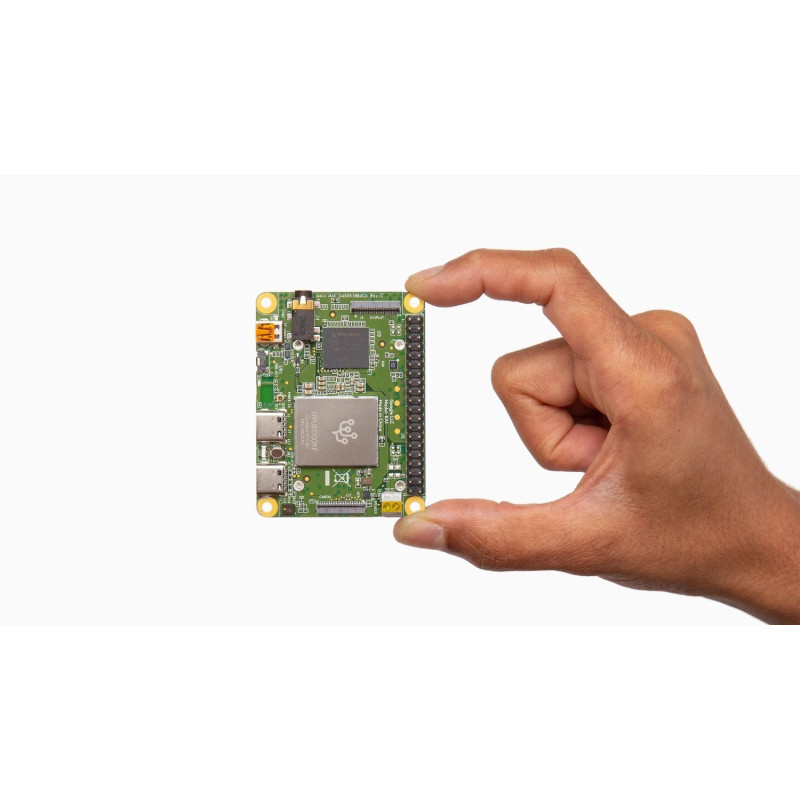
Coral Dev Board Mini is a single board computer (SBC) based on the 64-bit 4-core ARM Cortex-A35 processor, which allows you to quickly prototype and deploy an embedded system with artificial intelligence algorithms on the device by integrating Edge TPU, a specialized tensor processor belonging to the class of neural processors developed by Google. This coprocessor (Edge TPU) is designed to work with the low-power TensorFlow Lite machine learning library and performs 4 trillion operations per second (4 TOPS) using only 2 watts of power (that's 2 TOPS per 1 watt). The Edge TPU coprocessor communicates with the MT8167s SoC via the USB 2.0 interface. The Edge TPU is designed to run modern mobile vision applications, such as MobileNet v2, at nearly 400 frames per second using AutoML Vision Edge. Machine learning processing is performed on the device, which reduces latency, increases data privacy, and eliminates the need for a constant Internet connection.
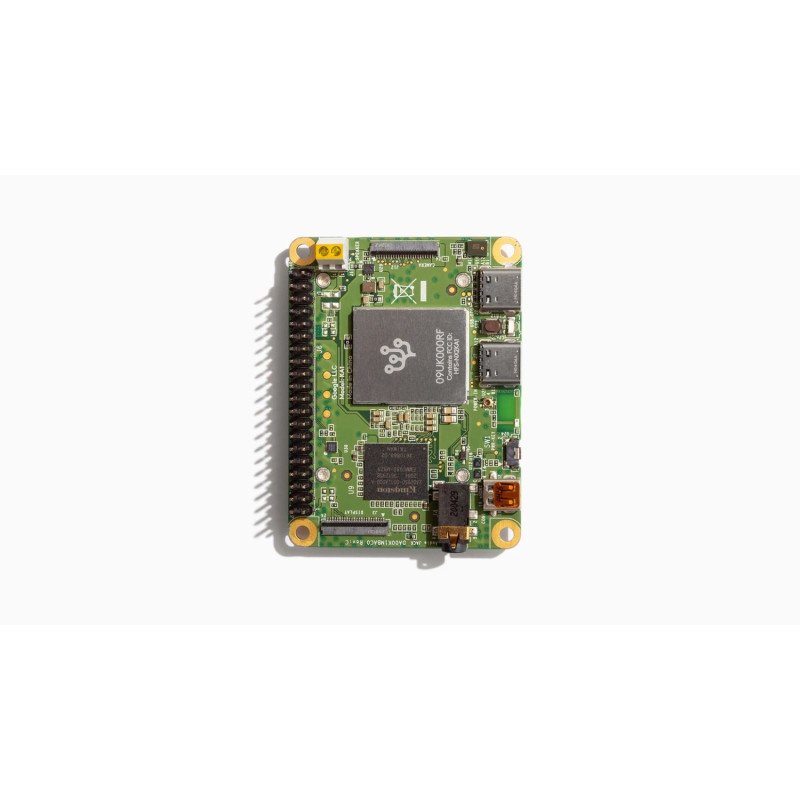
The microcomputer has Wi-Fi and Bluetooth 5.0 wireless communication interfaces, a standard 40-pin GPIO, USB 2.0 Type-C OTG, HDMI 1.4a (micro), MIPI DSI display, and MIPI CSI camera.
The board has a built-in PDM digital microphone and a 3.5 mm audio output jack.
The Coral Dev Board Mini runs on the Mendel OS based on Debian Linux flashed to Flash by the manufacturer.
Specifications:
Main system-on-chip (MediaTek MT8167s)
- CPU: 4-core ARM Cortex-A35 processor
- 64-bit Armv8-A architecture
- 32 KB of L1 instruction cache
- 32 KB of L1 data cache
- A single 512 KB second-level cache.
- Frequency up to 1.5 GHz.
- Graphics processing unit (GPU): Imagination PowerVR GE8300
- 150 million triangles/sec.
- 1.6 gigapixels / sec at 600 MHz
- Supports OpenCL 1.2 and Vulkan 1.0 profiles.
- Supports OpenGL ES 1.x, 2.0, 3.0, 3.2 3D.
- Video processing unit (VPU)
- Decoder of the main HEVC 1080p / 60fps profile
- 1080p / 60fps basic, limited basic profile, MPEG4 decoder
- 720p / 30fps MPEG-1, 2, H.263, H264 decoder
- built-in memory
- Bootable ROM (96 KB)
- Built-in RAM (256 KB + 64 KB)
- Audio.
- Interfaces support DAI, I2S, TDM, SPDIF.
- Sample formats support 16-bit, 24-bit, mono, stereo.
- 4-band FIR compensation filter to improve the response of loudspeakers.
- Display.
- HDMI 1.4a display output: Supports panel resolutions up to 1920x1080.
- MIPI-DSI Display: 4 data lanes, 24-pin CSI connector, 1 Gbps maximum bit rate.
- Camera: MIPI-CSI2 camera input:
- 4 data lanes
- 24-pin CSI connector
- Supports a camera with a resolution of up to 8 MP.
- Security
- built-in crypto chip (A71CH)
- ARM TrustZone for chip-to-cloud security.
ML accelerator - Edge TPU coprocessor
- High-performance machine learning inference for TensorFlow Lite models
- 4 trillion operations per second (TOPS)
- 2 TOPS per watt
- Uses USB 2.0 interface with MT8167s SoC.
Memory and storage
- RAM (SDRAM)
- 2 GB LPDDR3 SDRAM (4 channels, 32-bit bus width)
- Maximum DDR frequency 1600 MHz
- Interfaces directly with the built-in DDR controller of the SoC.
- Flash memory (eMMC)
- 8 GB of NAND eMMC flash memory
- 8-bit MMC mode
- Compliant with JEDEC versions 5.0 and 5.1.
- Expandable flash memory (microSD)
- Complies with SD / SDIO 3.0 standard
- Supports SD / SDHC / MMC
- The maximum card capacity is 32 gigabytes.
- Works in 4-bit SDIO mode.
Network and wireless communication
- MediaTek MT7658 Wi-Fi module:
- Wi-Fi 5 (802.11a / b / g / n / ac 2.4 / 5 GHz)
- Supports SDIO3.0 interface for W-LAN.
- MediaTek MT7658 Bluetooth module:
- Bluetooth 5.0 (supports Bluetooth with low power consumption)
- Supports UART interface.
Peripheral support (Connectors)
- 40-pin I / O connector
- USB 2.0 Type-C OTG
- Powered by USB Type-C
- 2-pin mono speaker jack
- 3.5 mm headphone jack
- Micro HDMI
- MicroSD card (half-size reader slot)
- MIPI DSI display (flat 24-pin flexible cable)
- MIPI CSI camera (flat 24-pin flexible cable)
Peripheral connectors:

Power button : Controls power to the board. If only the USB-C power port is connected, you must press this button to boot the board (press firmly). You can turn off the board by pressing it again. If the USB OTG port is connected to a power supply, then the board boots automatically and this button reboots the board instead
User button: does nothing by default. You can program your own behavior using GPIO2
USB-Cpower : For power supply only.
LED (status indicator light).
Orange - The system is booting up. If it stays orange for more than a minute, a boot failure may have occurred (except for the first boot after firmware, which takes several minutes).
Green - The system is booting up.
Red - The system is in fast boot mode (ready to flash).
Mono speaker (Mono speaker terminal): This is a 2-pin terminal connector with a 2.54 mm pitch for a 4 ohm/8 ohm monaural speaker (up to 1 W).
Headphone jack - standard 3.5 mm audio jack
Microphone. This is a built-in PDM digital microphone. It uses the same capture device as the headphone jack, using the headphone jack as a switch. That is, if you plug in your headphones, this PDM microphone will be muted.
Micro HDMI - Micro HDMI port
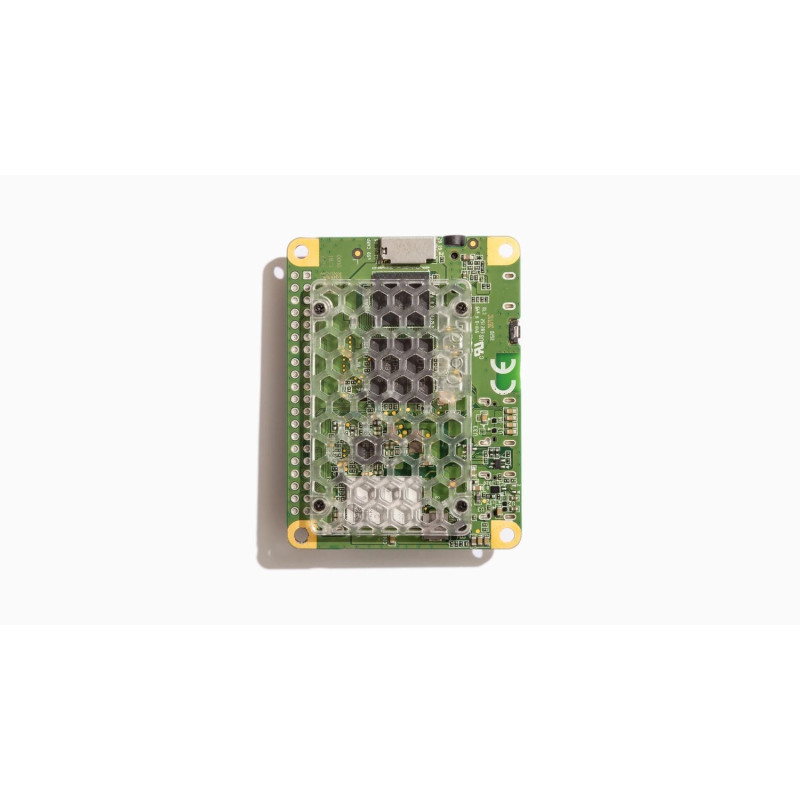
MicroSD - microSD memory card slot. Supports SD/SDHC/MMC (card capacity up to 32 gigs) and complies with SDIO 2.0/3.0 standard to provide expanded memory for the system. The card must be inserted with the contacts facing up (towards the board).
GPIO - All GPIO pins can be configured for input or output. System Mendel includes a default configuration to enable PWM, I2C and UART on some pins.
CSI Camera- camera connector
DSI Display - display connector
Overall dimensions: 64.0 × 48.0 × 14.6 mm

Weight: 25.5 g
There are no reviews for this product.
There are no reviews for this product, be the first to leave your review.
No questions about this product, be the first and ask your question.