We do not store credit card details.
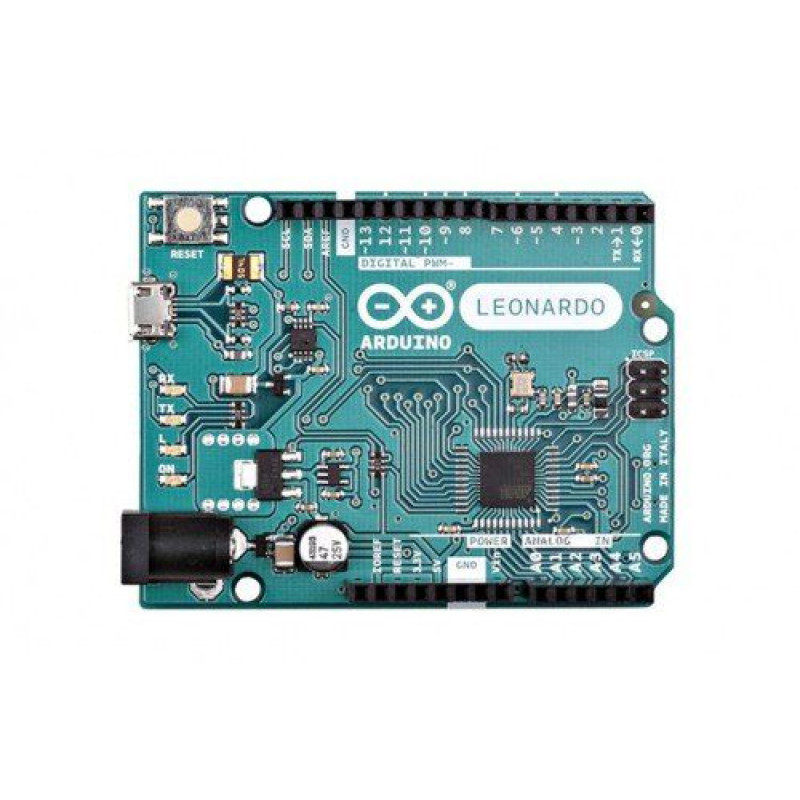
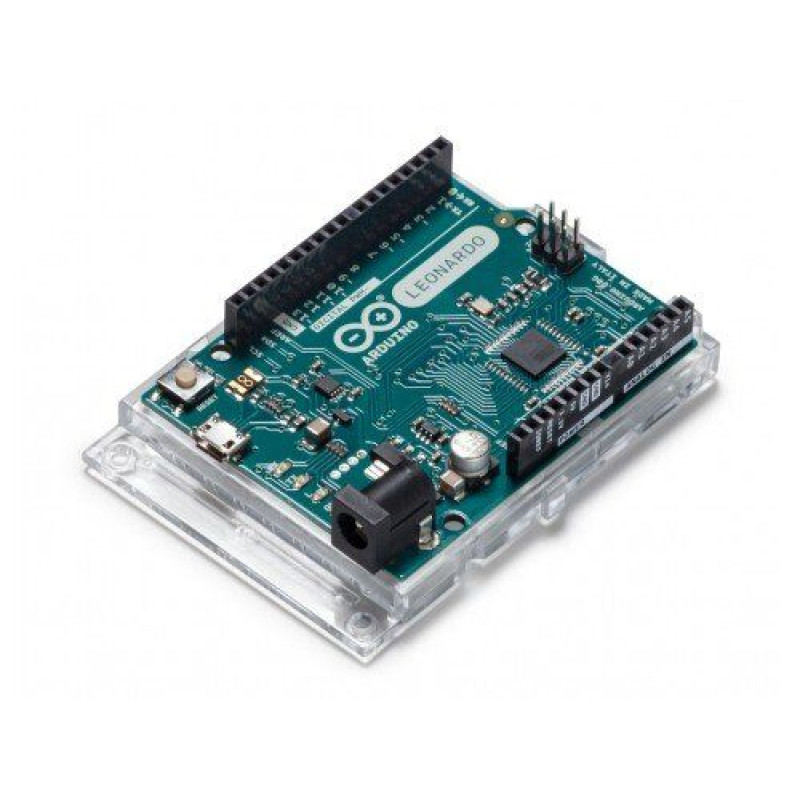
Arduino Leonardo Without Headers / A000052
We do not store credit card details.
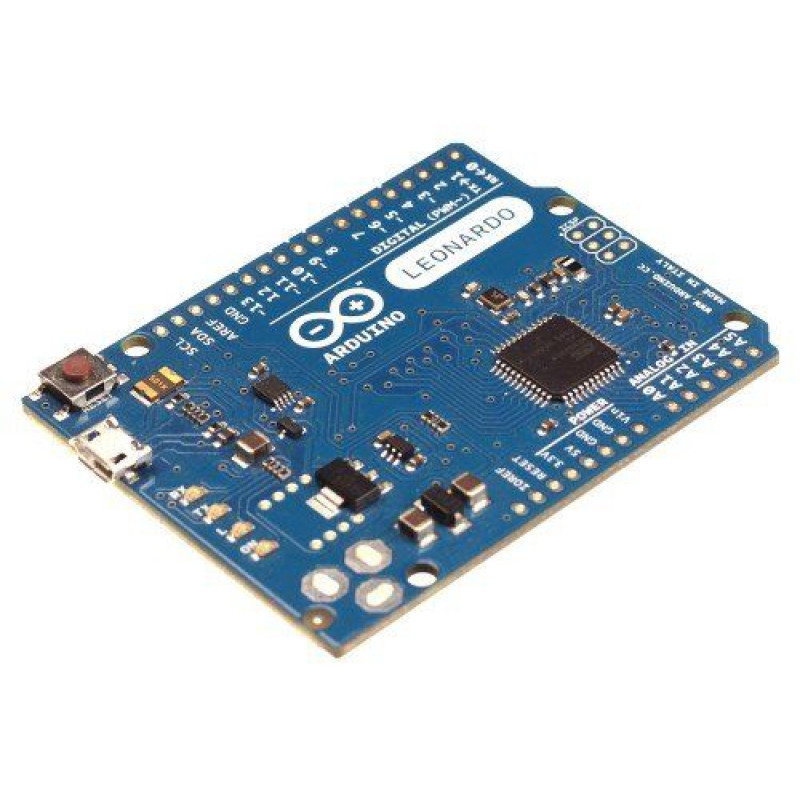
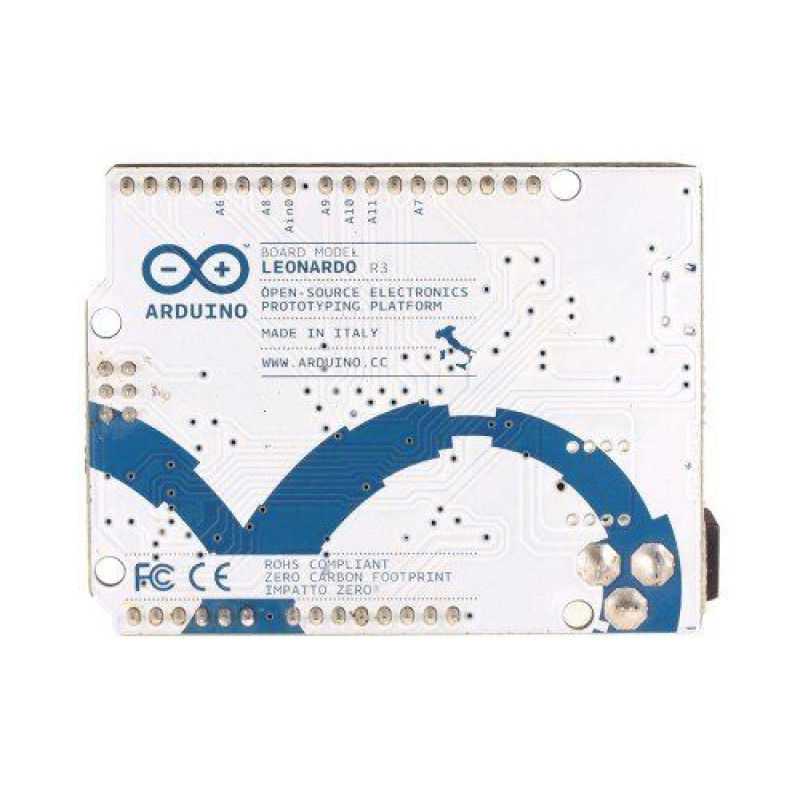
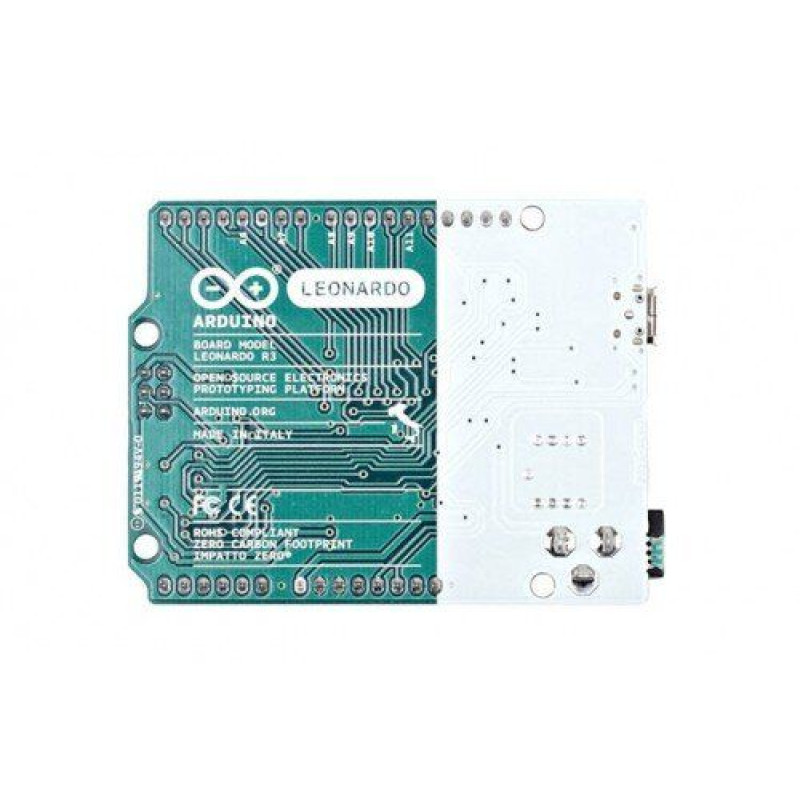
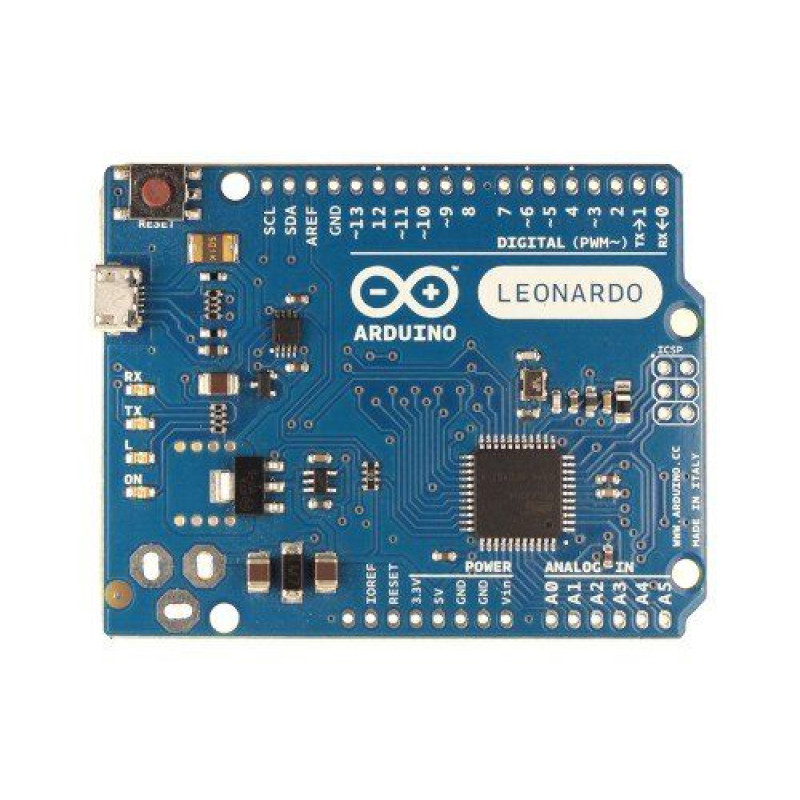
Arduino Leonardo is a board designed on the ATmega32u4 microcontroller. The board has 20 digital inputs / outputs (7 of which can work as PWM outputs, 12 as analog inputs), a 16 MHz processor, a micro-USB connector, a power connector, an ICSP (In-Circuit Serial Programming) connector and a Reset button. To start working with Leonardo, you just need to supply power from an AC/DC adapter or battery, or connect it to a computer using a USB cable.
The Leonardo differs from all previous boards in that the ATmega32u4 microcontroller has built-in software support for USB connection, which allows you to do without a second processor on the board. This enables the board to appear to the computer not only as a virtual COM port, but also as a HID device (mouse or keyboard).
Memory: The ATmega32u4 has 32 KB (of which 4 KB is used for the bootloader). It also has 2.5 KB of SRAM and 1 KB of EEPROM (which can be read and written using the EEPROM library).
The Leonardo has a number of means to communicate with a computer, another Arduino, or other microcontrollers. The ATmega32U4 provides UART TTL (5 V) serial communication, which is available on digital pins 0 (RX) and 1 (TX). The 32U4 also supports serial (CDC) communication via USB and appears as a virtual COM port for software on a computer. The chip also acts as a full-speed USB 2.0 device using standard USB COM drivers.
The Arduino software includes a serial monitor that allows you to send simple text data to and from the Arduino board. The RX and TX LEDs on the board will blink when data is being transmitted over the USB connection to a computer (but not for serial communication on pins 0 and 1). The SoftwareSerial library provides serial communication on any of the Leonardo digital pins. ATmega32U4 also supports I2C (TWI) and SPI communication. The Arduino software includes the Wire library to simplify the use of the I2C bus. To communicate with SPI, use the SPI library (the Leonardo looks like a regular keyboard and mouse, and can be programmed to control these input devices using the Keyboard and Mouse classes).
The Arduino Leonardo can be powered via the micro USB connector or from an external power source. The power supply is selected automatically. External (non USB) power can come from either an AC adapter or a battery. The adapter can be connected by inserting the 2.1 mm center-positive plug into the power connector on the board. The leads from the battery can be inserted into the Gnd and Vin pins of the POWER connector.
Power pins:
- VIN. The input voltage to the Arduino board when using an external power supply (as opposed to 5 volts from a USB connection or other regulated power supply).
- 5V. Regulated power supply used to power the microcontroller and other components on the board. It can come either from the VIN through the built-in regulator or from a USB or other regulated 5V power supply.
- 3V3. 3.3 V power supply generated by the on-board regulator. The maximum current consumption is 50 mA.
- GND. Grounding contacts.
- IOREF. The voltage at which the board's I/O pins operate (for example, VCC for the board). This is 5V on the Leonardo.
The Leonardo is equipped with a self-healing fuse that protects your computer's USB ports from short circuits and overcurrent. While most computers have their own internal protection, this fuse provides an additional layer of protection. If more than 500 mA of current is applied to a USB port, the fuse automatically breaks the connection until the short circuit or overload is removed.
Specifications:
| Microcontroller | ATmega32u4 |
| Operating voltage | 5V |
| Input voltage (recommended) | 7-12V |
| Input voltage (limit) | 6-20V |
| Digital outputs (I/O Pins) | 20 |
| PWM channels | 7 |
| Analog outputs (input) | 12 |
| Max. value of DC current per 1 pin (I/O Pin) | 40 mA |
| Max. value of DC current on pin 3.3V | 50 mA |
| Flash Memory | 32 KB (ATmega32u4) of which 4 KB are used for bootloader |
| SRAM | 2.5 KB (ATmega32u4) |
| EEPROM | 1 KB (ATmega32u4) |
| Frequency | 16 MHz |
The purpose of the board connectors:

Information for developers (Wiki): Arduino Leonardo.
Overall dimensions: 68.6mm x 53.3mm
Weight: 0.020 kg
There are no reviews for this product.
There are no reviews for this product, be the first to leave your review.
No questions about this product, be the first and ask your question.